
The Architecture of a Cohesive Wardrobe Across Changing Seasons
The Architecture of a Cohesive Wardrobe Across Changing Seasons
The Illusion of the Biannual Wardrobe Reset
The conventional wardrobe calendar suggests that every change in temperature requires a corresponding change in identity. Heavy garments are packed away, lighter pieces are purchased, and a new seasonal lineup takes over the rail. This ritual may feel orderly, but it often produces unnecessary consumption, crowded storage, and the persistent friction of owning clothes that work for only a few weeks of the year.
A more intelligent approach treats clothing as a permanent, integrated framework. Instead of dividing the wardrobe into spring, summer, autumn, and winter compartments, consider garments as modules with distinct structural roles. A shirt can become a base layer, a mid-layer, or a light jacket. A dress can sit beneath a sweater or coat. Trousers can shift from open footwear to boots without losing coherence. The goal is not to own fewer clothes at any cost, but to make each garment participate in a wider system.
This architectural perspective begins with physical properties rather than trend cycles. Fabric density, weave, insulation, breathability, cut, and proportion determine how successfully a garment responds to changing conditions. Once those properties are understood, a single wardrobe can accommodate cold mornings, warm afternoons, damp evenings, and transitional uncertainty without constant reinvention. The result is both practical and visually composed: fewer isolated purchases, more meaningful combinations, and a style language that remains stable as the weather changes.
The Grammar of Material Weight and Fabric Density
Fiber labels provide useful information, but they rarely tell the complete story. Cotton, wool, linen, and hemp can all perform very differently depending on yarn size, weave, finishing, and fabric weight. One of the clearest technical measures is GSM, or grams per square meter. A higher GSM generally indicates a heavier textile, although weight alone does not determine warmth. A loose, lofty wool knit may insulate more effectively than a dense but thin cotton fabric, while an open linen weave may feel cooler because it encourages airflow.
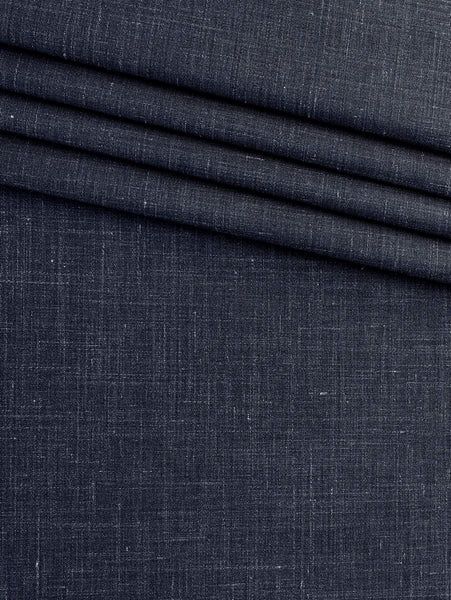
Weave structure is equally important. Open weaves create channels for air movement and can dissipate heat efficiently in mild conditions. Linen, seersucker, gauze, and loosely woven cotton are valuable when the body needs ventilation rather than insulation. Dense twills, poplins, canvas, and tightly woven wool, by contrast, interrupt airflow and provide greater resistance to brisk wind. This makes them useful in transitional outer layers, particularly when the temperature is changeable rather than uniformly cold.
The environmental case for careful material selection is substantial. The European Union”s textiles strategy identifies textile consumption as one of the major areas of environmental impact, with clothing affecting raw material use, water, land, emissions, and waste across its life cycle. Choosing durable, high-density natural fabrics where they genuinely suit the garment”s purpose can extend useful life and reduce replacement cycles. The key is not to equate natural with automatically superior, but to assess construction, care requirements, longevity, and actual frequency of wear together.
| Fabric structure | Typical seasonal role | Thermal behavior |
|---|---|---|
| Open-weave linen or gauze | Warm-weather base and overshirt | Encourages airflow and releases heat quickly |
| Lightweight poplin | Shirt or dusting layer | Breathable, yet more resistant to wind than loose weaves |
| Medium cotton twill | Trousers, overshirts, chore coats | Moderate protection with useful structure |
| Brushed cotton or fleece | Insulative core | Traps air and creates a warmer microclimate |
| Dense wool or canvas | Outer shelter | Reduces wind penetration and retains warmth |
Geometric Proportions and Silhouette Balance
A year-round wardrobe depends on garments fitting together physically, not merely matching in color. The most important relationship is between the body and the negative space around it. A close-fitting base layer can sit beneath a softly structured shirt, while a coat needs enough ease through the armhole and shoulder to accommodate both without restricting movement. When these dimensions are considered in advance, layering creates deliberate volume rather than accidental bulk.
Proportion also determines whether an outfit feels balanced across seasons. Wide-leg trousers often benefit from a compact knit, cropped jacket, or neatly tucked shirt above them. Conversely, a narrow trouser may find equilibrium beneath a longer overshirt or coat with controlled volume. These are not rigid rules, but useful visual equations. The objective is to establish a clear relationship between width, length, and structure so that each additional layer clarifies the silhouette instead of obscuring it.
- Pair generous lower-body volume with a defined or compact upper layer.
- Allow enough ease for layering at the shoulder, chest, and sleeve.
- Use long outer layers to create continuity over simple foundations.
- Repeat one architectural line, such as a straight hem or strong shoulder, across several outfits.
- Reserve oversized proportions for garments designed to carry that volume cleanly.
This restraint creates the quiet confidence associated with enduring design. Architectural clothing does not need novelty to appear considered. A long coat, a broad trouser, a clean shirt, and a textured knit can feel highly expressive when their proportions are intentional. The design principles discussed in values-led fashion design, including dignity, balance, fluidity, and craftsmanship, offer a useful reminder that restraint can expand creative possibility. Coverage, layering, and proportion become tools for shaping form rather than limitations imposed upon it.
The Three-Tier Climate Framework for Transitional Dressing
Transitional dressing works best when each layer performs a distinct climatic function. The first layer manages contact with the skin, the second regulates warmth, and the third protects against wind, light moisture, and fluctuating exposure. This framework is more adaptable than relying on one very warm garment because it allows the wearer to respond to conditions throughout the day.
The base layer should be lightweight, comfortable, and capable of managing moisture. Fine cotton, merino wool, silk, and carefully selected technical blends can all work, depending on climate and personal sensitivity. The essential quality is not simply softness, but the ability to remain comfortable when worn beneath another garment. A base layer that retains dampness or creates excess friction undermines every layer above it.
- Build the base. Start with a close but non-restrictive T-shirt, fine knit, camisole, or long-sleeved layer. Choose a fabric that allows moisture to move away from the skin and does not create unnecessary heat.
- Add the insulative core. Use an open-knit sweater, brushed cotton shirt, lightweight fleece, quilted vest, or fine wool cardigan. This layer should trap enough air for warmth while remaining mobile and easy to remove.
- Finish with architectural shelter. Select an unlined wool overshirt, poplin duster, canvas chore coat, trucker jacket, or lightly weather-resistant shell. Its role is to interrupt wind, provide structure, and protect the more delicate layers underneath.
The middle layer is where tactile intelligence becomes particularly valuable. Open-knit yarns create warmth without the sealed density of a heavy winter sweater, while brushed cotton adds softness and insulation at moderate weight. A shirt jacket can function as a substantial shirt in early autumn, then become a mid-layer beneath a coat when evenings grow colder. The garment remains useful because its architecture supports several positions in the system.
The outer layer should be judged by mobility as much as by protection. An unlined wool overshirt can cover a T-shirt on a mild morning, while a canvas chore coat can accommodate a knit when wind increases. Poplin dusters are useful in warmer transitional weather because they add coverage without excessive insulation. The most successful shelter pieces are not sealed seasonal costumes; they are modular membranes that can be added, removed, and recombined throughout the calendar.
Curating the Permanent Matrix Across the Calendar
A permanent wardrobe becomes easier to manage when it is viewed as a grid rather than a pile. One practical model uses three categories of tops, three categories of bottoms, and three layering pieces. If the items share a compatible palette and similar levels of formality, the theoretical system can create numerous combinations without requiring a large inventory. This grid-based logic resembles the “Sudoku” approach to packing, where nine carefully chosen pieces can generate as many as 27 possible pairings, although personal comfort and proportion should always override mathematical completeness.
Think in roles rather than isolated garments. A top might be a fine base, a structured shirt, or a textured knit. Bottoms might include a fluid trouser, a durable denim, and a more formal skirt. Layering pieces could be a short jacket, a long coat, and a shirt jacket. The categories are deliberately broad so they can adapt to different climates, professions, and aesthetics. A dress can act as a complete outfit, a skirt-like base beneath a sweater, or a long vertical layer beneath a cropped jacket.
- Choose one light, one medium, and one substantial option within each major category.
- Build a core palette around compatible neutrals, then introduce color through controlled accents.
- Use texture, such as ribbing, twill, brushed cotton, suede, or crisp poplin, to create variation.
- Keep trend-sensitive pieces limited and evaluate them by actual wear rather than novelty.
- Review the matrix after several months of use, not immediately after shopping.
Color harmony should move naturally from clear spring light to autumnal shadow. Chalk, stone, washed blue, soft olive, tobacco, charcoal, and deep brown can transition across the year more gracefully than highly seasonal brights. This does not mean eliminating color. It means placing expressive shades where they can communicate with the rest of the wardrobe. Tactile contrast often provides more lasting interest than a sudden change in hue: crisp poplin against brushed wool, dry canvas against smooth knitwear, or fluid fabric against structured tailoring.
Cultivating an Enduring Philosophy of Personal Form
The most durable wardrobe philosophy replaces cyclical novelty with technical appreciation. Instead of asking whether a garment belongs to the current season, ask what it does within the system. Does its fabric regulate temperature? Does its cut allow another layer? Can its color communicate with several existing pieces? Does its construction justify the care it requires? These questions shift attention from immediate desire to long-term usefulness without making style feel austere.
Begin with an audit of the current closet. Identify the garments that function as foundations, insulators, shelters, connectors, and expressive exceptions. Test combinations across temperature ranges, note where bulk or proportion fails, and repair or alter pieces that still have strong structural potential. A resilient wardrobe creates practical calm because dressing becomes a process of composition rather than emergency problem-solving. When every garment has a clear role and several possible relationships, the closet no longer waits for a seasonal reset. It becomes a coherent architectural environment that evolves with the wearer and remains useful throughout the year.