
Visual Stillness and the Art of Editing Your Immediate Surroundings
The Quiet Toll of Unseen Visual Noise
A workspace does not need to look messy to feel demanding. The obvious forms of disorder are easy to identify: stacked papers, tangled cables, overflowing shelves, and objects without a home. More consequential, however, are the quieter interruptions that remain within the field of vision while work is underway. A bright package near the monitor, an open drawer, a crowded windowsill, or a collection of tools that belongs to a different task can create a persistent background pull. None demands attention outright, yet each adds another small decision to the visual environment.
Over a long working day, these micro-distractions consume mental stamina. The issue is not that every object is consciously noticed, but that the visual system continuously evaluates change, contrast, edges, color, and potential relevance. Visual stillness offers a more intelligent alternative to sterile minimalism. It does not require an empty room or a personality-free desk. It means deliberately editing what surrounds the primary task, preserving negative space, balancing architectural forms, and introducing a few grounding materials that make the room feel composed rather than vacant.
The Cognitive Architecture of Visual Clutter
Human vision is designed to detect difference. Movement, irregular outlines, saturated color, and competing layers of depth can attract processing even when attention is directed elsewhere. Peripheral vision is especially useful for monitoring the surrounding environment, but that usefulness becomes costly in a workspace filled with unresolved signals. A shelf of mixed objects, for example, may function as a constantly changing visual field whenever the head moves or the eyes briefly leave the screen.
Objects in the background do not need to become conscious thoughts to influence the allocation of attention. They occupy neural representation, compete with the task for selection, and can make returning to deep work slightly more effortful. Research from the National Eye Institute on visual clutter describes how clutter can alter information flow in the brain, helping explain why a visually busy setting may feel tiring even when it appears technically organized.
This is why standard tidying often falls short. Tidying removes dirt and restores order, but visual stillness asks a different question: which elements deserve to remain in the active perceptual field? An attractive collection can still be distracting if its colors, silhouettes, or density compete with the desk. Conversely, a modestly furnished room can feel calm when its main planes are clear, its sightlines are intentional, and its objects belong to a coherent visual hierarchy. Research in neuroarchitecture, including work using virtual reality and mobile brain imaging, has also found relationships between architectural geometry and activity in regions involved in perception and cognitive processing. The design lesson is not that one shape is universally calming, but that spatial form participates in how an environment is experienced.
A Three-Tier Framework for Auditing Your Physical Workspace
A useful audit should be conducted when the workspace is being used, not only when it is being photographed. Sit in the working position, place the screen at its normal height, and observe what repeatedly enters awareness during ordinary movements. The following three steps convert an abstract desire for calm into a practical edit.
- Map the peripheral boundary. Slowly scan the area outside the central monitor or notebook zone. Identify objects that flash into view when you turn your head, stand up, or look away from the task. Mark persistent agitation rather than judging objects by their beauty. A vivid storage box or open rack may be more disruptive than a larger, quieter piece of furniture.
- Clear the visual horizon. Protect the primary desk surface and the sightline immediately beyond it. Remove items that belong to maintenance, administration, or future projects. Keep only the tools required for the current mode of work, such as writing instruments for planning, reference material for research, or a drawing tool for making.
- Create functional zones. Separate creation from maintenance. Printers, chargers, filing, packaging, spare stationery, and cables should have a defined peripheral zone rather than sharing the central field with creative tools. This reduces visual ambiguity and makes transitions between tasks more deliberate.
The audit becomes more effective when it is treated as observation rather than self-criticism. A workspace may need different configurations for writing, video calls, sketching, and analysis. The goal is not permanent emptiness, but a reliable default state that reduces the number of decisions required before focused work can begin.
The Art of Composing Negative Space and Surface Planes
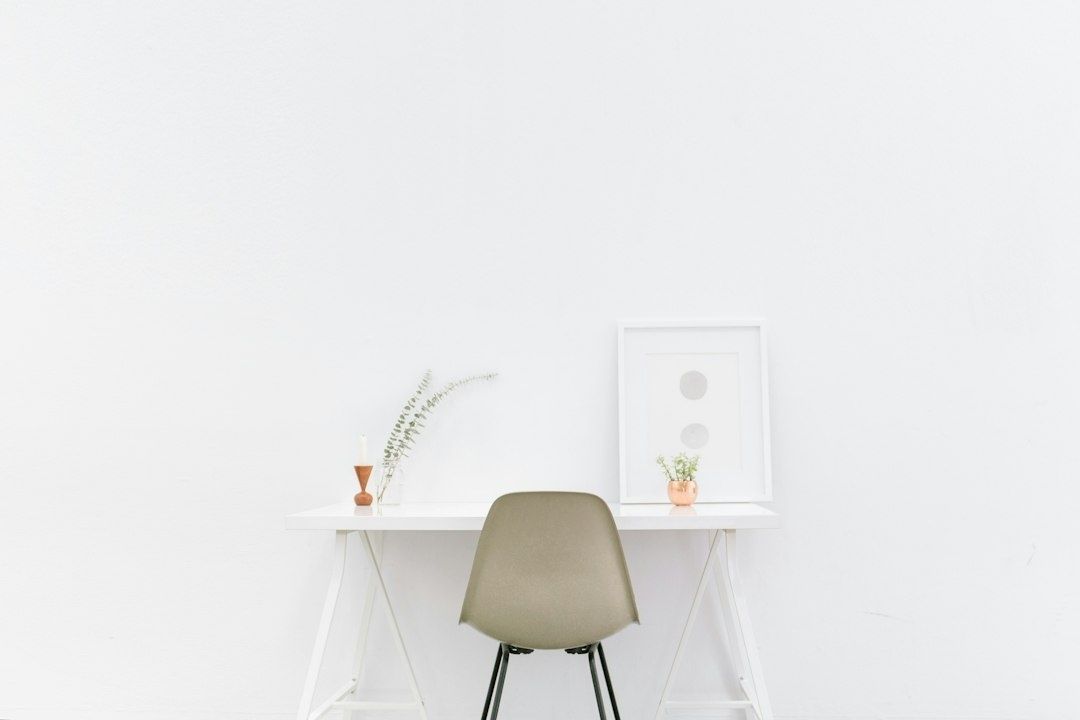
An empty section of desktop is not wasted capacity. It is a visual pause, much like silence in music or a margin in typography. Negative space gives the eye somewhere to rest and allows the objects that remain to register with greater clarity. A clear surface beside the keyboard can also provide physical room for a notebook, a cup, or a temporary reference without immediately becoming overwhelmed.
Spatial density should be calibrated to the work. A research desk may need several books and printed references, while a writing desk benefits from a more severe horizon. The question is whether the arrangement communicates readiness or unfinished demand. A restrained composition might place the monitor on one side, preserve a broad central plane, and group essential tools in a low tray. A denser arrangement can remain calm when objects share a material language, align to a common edge, and vary in height gradually rather than producing a jagged skyline.
| Workspace condition | Likely visual effect | Useful adjustment |
|---|---|---|
| High object density | Frequent competition for attention | Remove duplicates and move maintenance items outward |
| Large clear plane | Pause, flexibility, and easier visual orientation | Protect the surface from permanent storage |
| Mixed heights and silhouettes | Restless or fragmented composition | Group objects by scale and establish a calm horizon |
| Coherent geometry | Greater structural legibility | Align edges, repeat proportions, and limit competing forms |
Geometry can be quiet without becoming rigid. Rectilinear furniture, curved accessories, and softly irregular natural materials can coexist when their relationships are intentional. Research into interior forms and triply periodic minimal surfaces demonstrates how controlled geometry can distribute structure, porosity, and visual complexity in sophisticated ways. The study on triply periodic minimal surfaces in interior design concerns structural and material applications rather than everyday desk styling, but it offers a useful broader insight: balance can emerge from the relationship between solid and open areas, not merely from reducing everything to a blank plane.
Grounding Focus with Tactile Weight and Natural Textures
Visual stillness should not become sensory deprivation. A room composed entirely of glossy white surfaces may be orderly yet feel thin, exposed, or strangely effortful to inhabit. Tactile warmth gives calm a physical dimension. It introduces variation that the eye can understand and the body can feel, allowing the environment to remain quiet without becoming emotionally flat.
Authentic materials are particularly effective because they carry visible evidence of weight and use. Solid wood adds grain, warmth, and a sense of permanence. Matte ceramics provide a small, stable counterpoint to screens and polished technology. Heavy cotton, wool, felt, cork, and woven textiles soften hard edges while also contributing acoustic absorption. Desk-material research commonly associates hardwoods such as oak, walnut, cherry, and mahogany with durability and longevity, while also emphasizing that maintenance, sustainability, and work habits should guide the selection rather than prestige alone.
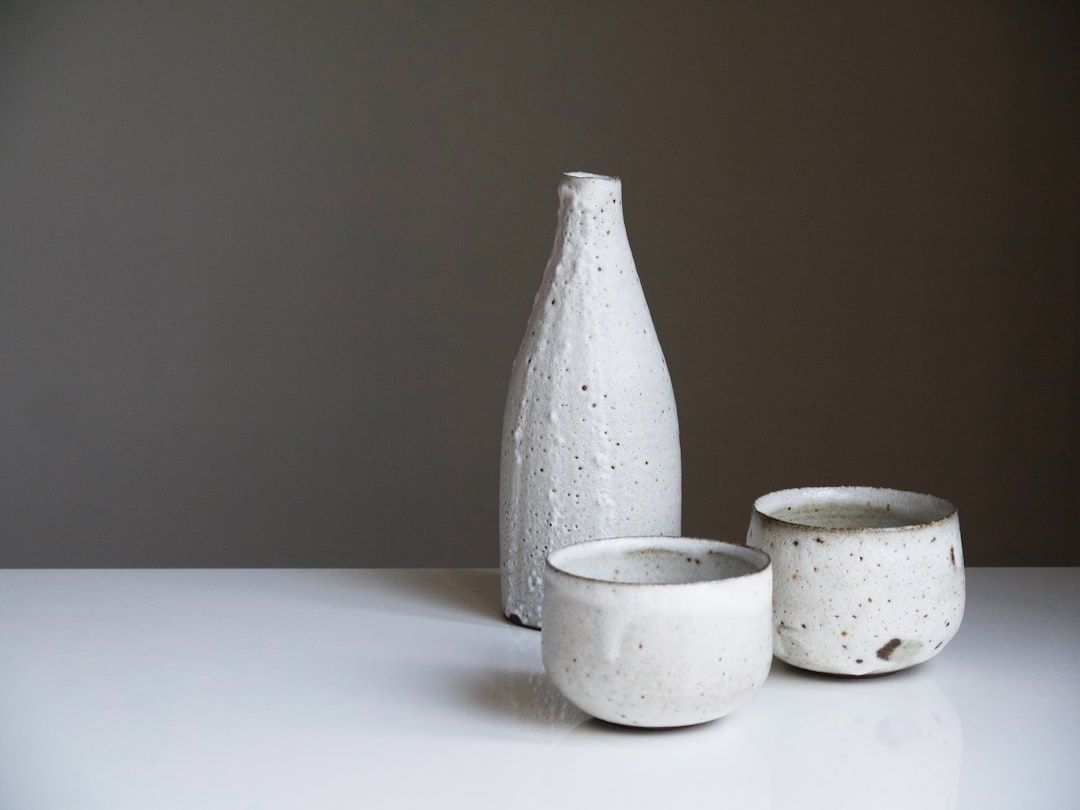
A restrained palette of physical anchors can be assembled without turning the desk into a display. Consider choosing:
- One substantial natural surface, such as a wood desktop, cork mat, or timber monitor riser.
- One matte object, such as a ceramic vessel or stone paperweight, to interrupt the uniformity of electronics.
- One soft element, such as a felt desk pad or tightly woven textile, to introduce warmth and reduce visual hardness.
- One living or organic reference, such as a modest plant, a branch, or a view toward greenery, provided it does not create additional maintenance pressure.
Material restraint matters. Too many textures can become another form of visual noise, particularly when every object claims a different finish. Select materials that age well, feel good under the hand, and support the identity of the work. A designer working with tactile prototypes may need accessible samples nearby, while an analyst may benefit from a nearly uninterrupted surface. The strongest arrangement is not the most luxurious one; it is the one that makes the intended mode of attention feel natural.
Cultivating a Daily Practice of Visual Stillness
Visual stillness is preserved through small, repeatable actions rather than occasional dramatic clear-outs. An evening reset can take five minutes: return tools to their zones, close notebooks, coil active cables, remove cups, and restore the central desk plane. The purpose is not perfection. It is to prevent yesterday”s unfinished decisions from becoming the first visual demand of tomorrow.
The home studio should be treated as an evolving sanctuary, not a finished image. Work changes, equipment changes, and the room may need to support both concentrated solitude and collaborative exchange. Gentle curation keeps the environment aligned with those shifts. When peripheral demands are reduced, negative space is protected, and a few tactile materials provide physical grounding, the room begins to support focus without announcing itself. That quiet support is the real achievement: an environment that leaves more of the mind available for making, thinking, and sustained creative work.