
The Chemistry of Living Colour: Why Botanical Dyes Age with Grace
The Living Spectrum Behind Plant Color
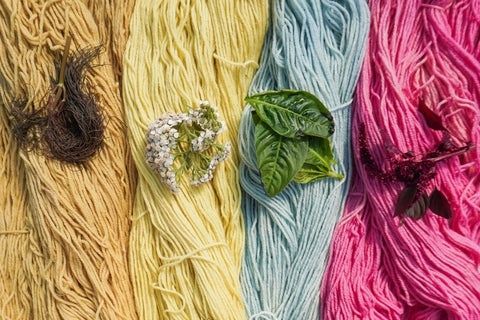
Industrial colour is designed to arrive at a destination and remain there. A synthetic pigment is generally selected for a defined shade, measured for consistency, and engineered to resist change across thousands of metres of cloth. Botanical colour behaves differently. It enters a textile as an extract shaped by season, soil, harvest, water chemistry, temperature, and preparation. Its character is less like a fixed code and more like a conversation between plant compounds and fibre.
That conversation is particularly visible in natural dyeing with soya milk, careful scouring, and controlled mordanting. Plant extracts rarely contain one isolated colour molecule. They carry mixtures of tannins, flavonoids, anthocyanins, quinones, and other compounds, each responding differently to light, oxygen, acidity, alkalinity, and the structure of the cloth. The gradual change that follows is therefore not automatically a manufacturing failure. When managed well, fading becomes patina, revealing the material”s history rather than erasing its identity.
Molecular Bonds and Fibre Chemistry in Silk and Linen
The first question in botanical dyeing is not simply which plant produces the desired shade. It is whether the fibre offers a suitable surface for the colour compounds to attach to. Silk, wool, and other protein fibres contain amino acids with reactive amine and carboxyl groups. These functional groups can attract and bind with compounds in many plant dyes, allowing colour to penetrate and remain within the fibre structure. Silk may therefore accept a botanical bath with comparatively little intervention, although preparation and temperature control still determine the final result.
Linen presents a more demanding substrate. As a cellulose fibre, it is largely composed of long chains of glucose units rich in hydroxyl groups. Those groups are polar, but they do not provide the same direct affinity for many natural pigments as the functional groups in protein fibres. Linen also carries waxes, pectins, oils, and processing residues that can prevent even wetting. Scouring is consequently a chemical preparation, not a ceremonial preliminary. A properly scoured fabric absorbs the dye bath more uniformly and reduces the risk of pale patches, streaks, and weak colour retention.
For cellulose textiles, a protein bridge can improve the relationship between pigment and fibre. Soya milk deposits soy proteins across the surface, giving linen or cotton some of the bonding behaviour associated with silk and wool. The coating is primarily physical rather than the same type of chemical complex formed by a metallic mordant. A long initial soak followed by thin applications, with drying between layers, can create a more receptive surface. Fresh milk is essential because fermentation may produce odour, uneven films, and patchy results. Small tests remain indispensable, since the outcome depends on the fabric, plant source, protein concentration, and bath conditions.
- Silk: protein chemistry generally offers stronger natural affinity for many botanical colourants.
- Linen: thorough scouring removes hydrophobic residues and improves even absorption.
- Soya pretreatment: a protein coating can help bridge plant pigments to a cellulose matrix.
- Process control: temperature, pH, immersion time, and drying intervals influence both shade and durability.
Synthetic Uniformity versus Botanical Complexity
Many industrial dyes are built around isolated chromophores, the molecular structures responsible for absorbing particular wavelengths of light. Coal-tar chemistry and later petroleum-based synthesis made it possible to manufacture colourants with highly predictable composition. A dye house can specify a shade, calculate a recipe, and reproduce it across batches with remarkable precision. This uniformity is valuable for brand consistency, but it also narrows the colour”s behaviour into a tightly controlled performance.
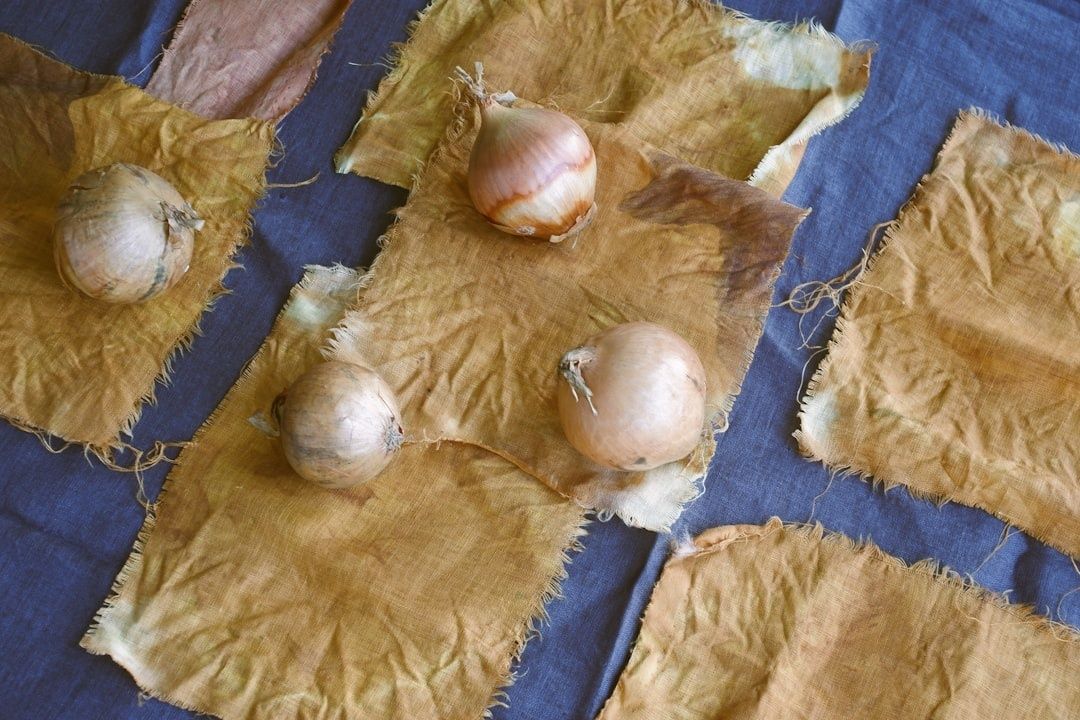
Botanical extracts are composite systems. Tannins may form complexes with metal ions and bind to fibres; flavonoids can produce yellows, creams, and muted greens; anthocyanins are especially sensitive to pH and may move between red, pink, violet, and blue ranges. Red onion skins demonstrate this variability particularly well. The same source can yield green, golden, pink, or maroon tones according to acidity, protein pretreatment, immersion time, cookware, and mineral content in the water. The apparent inconsistency is not random noise. It is evidence of several colour-bearing molecules responding at once.
Industrial dyeing also has a significant environmental burden. A technical overview of textile dye chemistry describes the scale of industrial colour production, the persistence of many effluents, and the challenges created by salts, surfactants, changing pH, and recalcitrant organic compounds. Natural dyes are not automatically harmless, however. Their advantages depend on responsible cultivation or sourcing, efficient extraction, suitable fibres, and careful treatment of mordant and rinse water.
| Characteristic | Synthetic colourants | Botanical colourants |
|---|---|---|
| Composition | Often isolated, engineered molecules with controlled purity | Complex mixtures of tannins, flavonoids, anthocyanins, and related compounds |
| Bonding mechanisms | May use covalent bonding, adsorption, complex formation, or solution-based fixation | May involve adsorption, hydrogen bonding, fibre coating, and metal or tannin complexes |
| Colour behaviour | Highly repeatable and usually designed for strong initial uniformity | Responsive to fibre, pH, water minerals, temperature, and extraction conditions |
| Lightfastness | Can be engineered for high resistance, although performance varies by dye class | Ranges widely by plant source and compound; gradual change is common |
| Environmental profile | May involve hazardous feedstocks and persistent or toxic wastewater | Renewable inputs are possible, but water use, land use, mordants, and effluent still require scrutiny |
The Chemistry of the Patina
Lightfastness is governed by the way colour molecules absorb energy. Photons can excite a chromophore, initiating oxidation, bond cleavage, or other photochemical reactions. In a highly uniform synthetic system, degradation may become visually obvious once the original chromophore has been sufficiently damaged. The fabric can lose saturation, develop a dull cast, or fade unevenly where exposure, abrasion, and washing differ. A supposedly permanent colour can therefore become visually obsolete in a relatively abrupt way.
Botanical colour often changes through a more layered sequence. One compound may be especially vulnerable to ultraviolet exposure, while another remains attached to the fibre and contributes a quieter residual tone. Tannins, metal complexes, and secondary pigments can alter the rate and direction of change. The result may be a gentle reduction in intensity rather than a single collapse of colour. This does not mean every natural dye fades beautifully. Some sources are fugitive, and poorly prepared cloth can lose colour rapidly. Graceful ageing is the outcome of informed selection and disciplined process, not a guaranteed property of anything labelled natural.
The aesthetic distinction matters because a garment is not experienced under laboratory conditions. Sleeves receive more sunlight and abrasion than hidden seams. A bag develops darker edges where hands repeatedly touch it. Washing softens the fibre while gradually redistributing the visual emphasis of the dye. In the practice described by Haru Nomura”s textile work, wear is part of the object”s completed form. Repair, re-dyeing, and continued use can add information rather than conceal damage. The textile becomes a record of movement, climate, care, and time.
Ecological Realities of Mordanting and Water Stewardship
Mordants alter the chemical environment so that a dye can attach more effectively or form a less soluble complex within the fibre. Aluminium salts, iron, copper, tin, and chromium have all been used in dyeing traditions, while tannins can provide an anchoring layer for cellulose fibres and help bind subsequent metal treatments. Iron often darkens or “saddens” colour, extending a palette toward greys, olives, and charcoal. Alum is widely valued for its comparatively manageable toxicity, but “safer” does not mean suitable for careless disposal.
The environmental issue is inseparable from water. Textile processing can consume enormous quantities of water, and contaminated discharge may carry residual colour, salts, metals, surfactants, and organic compounds into rivers. The discussion in Fashion Revolution”s water report makes an important corrective: natural dyes can reduce certain risks, but they do not remove the need for infrastructure, regulation, traceability, and restraint. A natural dye bath may still involve intensive cultivation, repeated rinsing, large extraction volumes, and problematic mordants.
A contemporary studio can reduce its impact through a documented, measured workflow rather than relying on the label “eco-friendly.” The following practices create a more responsible baseline:
- Measure recipes precisely. Record fibre weight, plant material, bath volume, pH, temperature, duration, and mordant concentration so that successful processes can be repeated without unnecessary trial baths.
- Separate and label wastewater. Keep mordant solutions, first dye baths, and rinses distinct. This makes recovery, neutralisation, filtration, or licensed disposal more practical.
- Use the lowest effective mordant load. Test alum, tannin systems, or plant-based alternatives before reaching for copper, tin, chromium, or other metals, and never discharge concentrated solutions into household drains.
- Reuse water where hygiene and chemistry allow. A later rinse may serve for preliminary washing, while exhausted dye baths can sometimes be used for secondary shades or paper, provided the composition is understood.
- Design for longevity. A durable garment worn for years can offset more resource use than a technically efficient but disposable product. Care instructions and repair options are part of the dye system.
Cultivating an Enduring Relationship with Living Textiles
Selecting a naturally dyed garment means accepting a more nuanced definition of performance. Examine the fibre, the dye source, the mordant, and the intended use. A delicate, light-sensitive botanical shade may be entirely appropriate for an occasional scarf but less suitable for upholstery or a heavily exposed work jacket. Designers should request or conduct wash, rubbing, and lightfastness tests where performance is critical. Standardised testing, including ISO 105 methods, can turn vague claims about durability into useful comparative information.
Care should be gentle and proportionate. Wash naturally dyed textiles in cool water with a mild, pH-neutral detergent, avoid prolonged soaking, and dry them away from direct sunlight. Strong alkalinity can shift or weaken some botanical colours, while acidic conditions may alter anthocyanin-rich dyes. Do not assume that every plant dye responds identically, so a hidden seam or spare swatch is valuable before using a new cleaning product. Most importantly, treat gradual change as part of the textile”s material life. A living colour does not ask to remain frozen. It asks for informed stewardship, allowing the garment to become a participatory object shaped by use rather than a static consumer good.